
Tokyo Marathon: 42.195km of drama awaits you!
The Tokyo Marathon began in 2007 and is held every March as one of the world’s largest urban marathons.
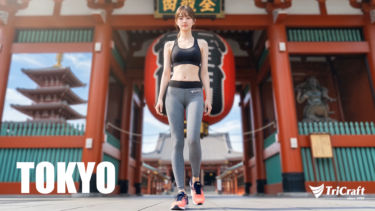
Over 30,000 runners start in front of the Tokyo Metropolitan Government Building, passing through famous sites such as Asakusa, Ginza, the area around the Imperial Palace, and Shinagawa before heading to Gyoko-dori street in front of Tokyo Station. The course is easy to run on, with few elevation changes and curves.
You can experience the drama of the 42.195km course while enjoying the Tokyo cityscape that you normally can’t run through. There is also enthusiastic support from the roadside, encouraging the runners.

A special experience where you can feel the charm of Tokyo with your whole body
The Tokyo Marathon began in 2007 and is now in its 17th year.Every March, over 30,000 runners run through the streets of Tokyo, sending their excitement around the world.New York, London, Berlin, Chicago, and Tokyo.The Tokyo Marathon, which is listed among the most famous international marathons, is truly a dream stage for runners.
Its scale, course, and cheers from the sidelines are all of the highest quality.
Course Overview
・Starting point:In front of Tokyo Metropolitan Government Building
・0km to 5km:Immediately after the start, there is a downhill slope, so a high-paced race is expected.
・5km and beyond:Head towards Tokyo Dome from the Iidabashi intersection and onto the new course.
・Up to 10km:Turn right at the Suidobashi intersection and return to the old course at the Jimbocho intersection.
・10km:Turn left at the Sudacho intersection and run through Akihabara’s main street.
・Up to 20km:An area with a string of good old townscapes. Ueno Hirokoji is the first turnaround point. From here, the course heads south to Nihonbashi. After that, it heads towards Asakusa Kaminarimon. From here you can see Tokyo Skytree.
・20km:The 20km point is on top of Kuramae Bridge over the Sumida River. Pass beside the Edo-Tokyo Museum and turn back at Monzen-Nakacho. This is an area with many small ups and downs on Kiyosumi-dori.
・30km:Pass the 30km point near Hamacho and run through the glamorous streets of Ginza and Sukiyabashi.
・40km:After passing the Shiba area where Tokyo Tower and Zojoji Temple await, turn back at Tamachi. You can see Tokyo Tower again. Turn right at the Hibiya intersection and turn left at the Nakadori entrance, and there is 1km left. The cobblestoned and atmospheric Marunouchi Nakadori will support your final sprint.
Finish point:Tokyo Station, Gyoko-dori
Elevation difference and climate
・Elevation difference: The course is remarkably flat and fast. It starts at an elevation of about 33m at the Tokyo Metropolitan Government Building and descends to near sea level. There are no major hills like the bridges of New York, making it an ideal course for setting a personal best.
・Weather: Tokyo, where the race is held in early March, usually has cool and crisp weather perfect for running. The average temperature is 6-12°C, and it is often sunny with low humidity and gentle winds.
Participants’ comments
・ “The experience far exceeded my expectations. The organization was perfect and I couldn’t stop smiling!”
・ “The support from the sidelines was so polite yet enthusiastic. It was the best time!”
・ “The view of the Tokyo Station finish line is something I’ll never forget.”
・ “Asakusa felt like a traditional festival just for the runners.”
・ “It felt like the whole of Tokyo was embracing the runners with Japanese hospitality (Omotenashi).”
・ “I felt like a pro athlete for 42km. I’ve never experienced such a smooth and exciting race.”
・ “The energy of running through Shinjuku and the inspiration from seeing the elite runners pass by made this experience really special.”
・ “The support from the volunteers was incredibly warm (I highly recommend thanking them as you run!).”
Strategy
The key to conquering the Tokyo Marathon is to use the early downhill from Shinjuku to find a comfortable pace without going too fast. Use the lively energy in Asakusa and the wide, flat roads of Ginza to maintain your rhythm. Save some energy for the final stretch towards Tokyo Station, where the crowds are thickest. Since the course is flat, it’s a great opportunity for a fast time, so focus on steady pacing and enjoy the unique sights of the capital.
The Tokyo Marathon is a 42.195km journey that will thrill all your senses. Run through a city where tradition meets the future with runners from all over the world, and experience the greatest thrill and sense of accomplishment of your life.
2026 Tokyo Marathon Summary
Date and Time
・Sunday, March 1, 2026. The race began in the morning (starting at the Tokyo Metropolitan Government Building and finishing at Tokyo Station/Gyoko-dori Avenue), with the main race setting off at 9:10 AM local time.
・The time limit for the race was 7 hours.
Temperature, Weather, and Wind
・Temperatures were approximately 8°C (46°F) in the morning, rising to about 13°C (55°F) by midday, and reaching roughly 15°C (59°F) by 2:00 PM. It was mild and pleasant conditions typical for Tokyo in early March.
・Runners across all starting waves enjoyed favorable weather conditions throughout the race.
・No consolidated data is available regarding wind or precipitation.
Number of Participants (Entries)
There were over 37,000 entries—one of the highest numbers in the event’s history.
A breakdown of the number of starters by gender was not available.
Geographic Distribution of Finishers
・Participants came from over 100 countries and regions.
・There were approx. 28,000 participants from Japan, with international participants accounting for approximately 25% of the total.
・The top countries/regions outside Japan were Taiwan, the United States, Hong Kong, and the United Kingdom.
Number of Finishers
①Total /35,500
②Men /26,200
③Women /9,150 (25.8% of the total)
④Non-binary /100
⑤Gender not specified /50
・A completion rate cannot be calculated, as the total number of starters is unknown.
Average Finish Times
①Overall /Average:4:25:12、Median:4:18:30
②Men /Average:4:10:45、Median:4:02:15
③Women /Average:4:42:10、Median:4:36:50
・2,200 runners (6.2%) finished in under 3 hours (“sub-3”), and 13,800 runners (38.9%) finished in under 4 hours (“sub-4”).
Other Details
・Winners
- In the men’s race, Benson Kipruto (Kenya) won with a course record time of 2:02:16.
- In the women’s race, Sutume Asefa Kebede (Ethiopia) secured victory with a course record of 2:15:55.
- Both winning times set new course records in the history of this event.
- Chalu Deso finished 4th in the men’s race.
・Boston Marathon qualification: 4,800 runners (13.5%) met the qualifying standards.
・Pacing: Only 9.1% of runners ran the second half faster than the first (a “negative split”). The 35–40 km segment was the slowest part of the race for most.
・Age groups: The largest age group was the 40–49 bracket, with 11,200 runners; the 35–39 age group recorded the fastest median time at 4:10:20.
TOP10
MEN
1: Tadese Takele: 2:03:37
2: Geoffrey Troitytch: 2:03:37
3: Alexander Mutiso: 2:03:38
4: Daniel Mateiko: 2:03:44
5: Muktar Edris: 2:04:07
6: Iliass Aouani: 2:04:26
7: Bethwell Kiprotich: 2:04:31
8: Victor Kipchirchir: 2:04:35
9: Sisay Lemma: 2:04:41
10: Haimro Alame: 2:04:45
WOMEN
1: Brigid Kosgei: 2:14:29 (Course Record)
2: Bertukan Welde: 2:16:36
3: Hawi Feysa: 2:17:39
4: Sutume Asefa Kebede: 2:17:39
5: Megertu Alemu: 2:18:50
6: Meseret Abebayahau: 2:19:10
7: Tiruye Mesfin: 2:19:30
8: Workenesh Edesa: 2:20:10
9: Pascalia Jepkosgei: 2:21:39
10: Ai Hosoda: 2:23:39

2027 Tokyo Marathon
Calling all runners out there, this 42.195km race is a thrilling experience for you. Join fellow runners from around the world as you run through the streets of Tokyo, breaking your personal best and experiencing something unforgettable.
・Location: Tokyo Metropolitan Government Building (Start)
・Date and time: March 7, 2027
・Start time: 9:10am


Tokyo: A city of infinite possibilities where the past and future intersect
Tokyo is the capital of Japan and one of the world’s leading megacities.Its charm is so full of diversity that it is difficult to describe it in a single word.A unique culture that combines tradition and innovation, cutting-edge trends that lead the world, and abundant nature all blend together in harmony, continuing to attract visitors.
Walking the streets of Tokyo, you may feel as if you have traveled back in time.Historical buildings such as the Kaminarimon Gate in Asakusa and Meiji Shrine still have a strong presence today, conveying Japan’s traditional culture.Then, just one step further, Shibuya’s Scramble Crossing and Shinjuku’s skyscrapers unfold a futuristic city-like scene.In this way, Tokyo is a city where tradition and innovation coexist, and you can experience a unique culture where the past and the future intersect.
Tokyo is also a city that is constantly creating new trends.Shibuya and Harajuku are the epicenters of youth culture, sparking new movements in various fields such as fashion, music, and art.Ginza is also lined with luxury brand stores, and is the source of Japan’s cutting-edge trends.Tokyo is a city that attracts trend-conscious people from all over the world and is always providing new stimulation.
The streets of Tokyo have a variety of expressions that are difficult to describe in a single word.Shinjuku is a business district lined with skyscrapers, but also has lush parks such as Shinjuku Gyoen.Shibuya is the center of youth culture and is always full of energy.Ginza is characterized by its sophisticated streets lined with luxury brand stores.In this way, each area of Tokyo has a different face, and you can feel the diverse charms by walking through the various streets.
Tokyo is also a place where gourmet food from all over the world comes together.In addition to Japanese cuisine such as sushi and tempura, you can also enjoy ramen, curry rice, and cuisine from all over the world.
There is also a wide selection of sweets, and many popular restaurants have long lines.Tokyo is a veritable treasure trove of gourmet food that is irresistible for gourmets.
Although Tokyo is a large city, it is also rich in nature.There are many lush parks, such as Ueno Park, Yoyogi Park, and the area around the Imperial Palace.If you go a little further, you will also find natural areas such as Mount Takao.Tokyo is a city where you can get away from the hustle and bustle of the city and experience nature.It is also easy to travel to various parts of the city, making it an easy city to visit.Tokyo serves as an access hub that can be used not only as a base for travel within Japan, but also for overseas travel.
Tokyo is a fascinating city where you will find something new no matter how many times you visit.What new discoveries will you make in this city where the past and the future intersect?We encourage you to visit Tokyo and experience its charm for yourself.

How to Participate
Eligibility
・Age Requirement: Must be at least 19 years old on the day of the race.
・Time Limit: 7 hours. Participants must maintain a pace capable of completing the distance in 7 hours (approx. 9:55/km or 16:00/mile pace).
・Time-Based Entry (Qualifying Times): Guaranteed entry is available for semi-elite runners who meet specific age/gender time standards on a certified marathon course within the designated qualification window.
Entry Fees
① Non-Guaranteed Entry (Drawing / Lottery) & Guaranteed Entry:
Japan residents: Approx. ¥16,500
Non-Japan residents (International): Approx. ¥17,500
② Charity / Tour Entries: Requires meeting minimum fundraising goals set by official charity partners, or booking a package through an official international tour operator.
How to Register
・Online Registration: Register directly via the official website (Tokyo Marathon).
Applicants enter either through Guaranteed Entry (semi-elite, charity, tours) or Non-Guaranteed Entry (the general drawing/lottery).
Non-guaranteed applicants are selected via a lottery system if capacity is exceeded.
Registration Period and Deadlines
・Opening: Application period typically opens in August. ・Closing: The application window usually closes in late August to early September. Drawing results are announced in September.
Getting to Tokyo
Traveling to Tokyo
① From New York, USA
・By air: Direct flights are available from JFK and EWR airports to Tokyo (HND/NRT).
・Flight duration: Approximately 14 hours to 14 hours 30 minutes.
② From Los Angeles, USA
・By air: Direct flights are available from LAX (operated by airlines such as ANA, JAL, and United Airlines).
・Flight duration: Approximately 11 hours 30 minutes to 12 hours.
③ From London, UK
・By air: Direct flights are available from LHR (Heathrow Airport) to HND (Haneda Airport) (operated by airlines such as British Airways, JAL, and ANA).
・Flight duration: Approximately 13 hours 30 minutes to 14 hours.
④ From Paris, France
・By air: Direct flights are available from CDG (Charles de Gaulle Airport) to HND (operated by airlines such as Air France, ANA, and JAL).
・Flight duration: Approximately 13 hours 30 minutes to 14 hours.
⑤ From Chicago, USA
・By air: Direct flights are available from ORD to HND and NRT (operated by airlines such as ANA, JAL, and United Airlines).
・Flight duration: Approximately 13 hours to 13 hours 30 minutes.
⑥ From Shanghai, China
・By air: Direct flights from PVG and SHA to HND and NRT.
・Flight duration: Approximately 3 hours to 3 hours 30 minutes.
⑦ From Sydney, Australia
・By air: Direct flights from SYD to HND and NRT (operated by Qantas, JAL, and ANA).
・Travel time: Approximately 9 hours 30 minutes to 10 hours.
⑧ From Singapore
・By air: Direct flights from SIN (Changi Airport) to HND and NRT (operated by Singapore Airlines, ANA, and JAL).
・Travel time: Approximately 6 hours 30 minutes to 7 hours.
Getting Around Tokyo
Transportation from major gateways to the starting point
・Major gateways:
Tokyo International Airport (Haneda Airport / HND) (approx. 15 km south of the city center)
Narita International Airport (NRT) (approx. 60 km east of the city center)
Start/Finish Line:
Start Line: Tokyo Metropolitan Government Building in Shinjuku.
Finish Line: Tokyo Station / Gyoko-dori Avenue.
Access from gateways (airports):
・Public transit (Train/Monorail): From HND, take the Tokyo Monorail to Hamamatsucho or Keikyu Line to Shinagawa, then transfer to JR Lines to Shinjuku (approx. 40–50 minutes). From NRT, take the JR Narita Express (N’EX) directly to Shinjuku Station (approx. 80 minutes).
・Ride-hailing services/taxis: Taxis take approx. 30–50 minutes from HND and 60–90 minutes from NRT depending on traffic.
Nearest stations and local transit:
・Subway/JR Lines: JR Shinjuku Station (West Exit), Toei Oedo Line Tochomae Station, or Tokyo Metro Marunouchi Line Nishi-shinjuku Station provide direct walking access to the Tokyo Metropolitan Government Building.
Accommodation and Related Arrangements
Recommended Areas for Accommodation
・Shinjuku Area (within walking distance of the start venue):
Features: Located within walking distance of the start line (Tokyo Metropolitan Government Building), eliminating the need for public transit on race morning.
・Major Hotels:
Keio Plaza Hotel Tokyo (located directly across from the Metropolitan Government Building)
Hyatt Regency Tokyo (walking distance to the start line)
Hilton Tokyo / Hotel Gracery Shinjuku (within a 5–15 minute walk)
・Tokyo Station / Ginza Area:
Features: Located near the finish line, offering convenient access after finishing the race and vibrant shopping/dining options.
How to Arrange Accommodation
・Booking Official Partner Hotels:
You can book partner hotels via the official Tokyo Marathon entry or housing site at runner-dedicated arrangements. Early booking is essential as Shinjuku rooms sell out quickly.
・General Hotel Booking Sites:
Secure accommodation early using online travel agencies (OTAs) such as Booking.com, Agoda, or Rakuten Travel.
・Official Tours and Travel Agencies:
Consider booking through official international tour operators, which offer combined packages including guaranteed race entry, hotel, and logistical support.